Published on Friday, 10 July 2026 at 4:35:11 PM

Cr Stephanie Proud JP is the Chair of Mindarie Regional Council (MRC), a Regional Local Government and waste management authority which operates the Tamala Park Waste Management Facility and owns the Facility (now proposed for FOGO processing) at Neerabup.
“Much has been said in recent weeks regarding the future of Mindarie Regional Council (MRC), the Tamala Park Waste management site and what role MRC will have to play in how we manage our waste in future.
Of the many things we have heard about Tamala Park in recent weeks, none of them have come from MRC itself. As Chairperson of MRC, I hope you will allow me the opportunity to introduce some much-needed context and clear up some of the confusion.
Since 1987, MRC has existed for the sole purpose of providing sustainable waste management services for its Member Councils and their residents. Today, more than a third of the metropolitan population, from Bentley in the south to Two Rocks in the north, depend on the services we provide.
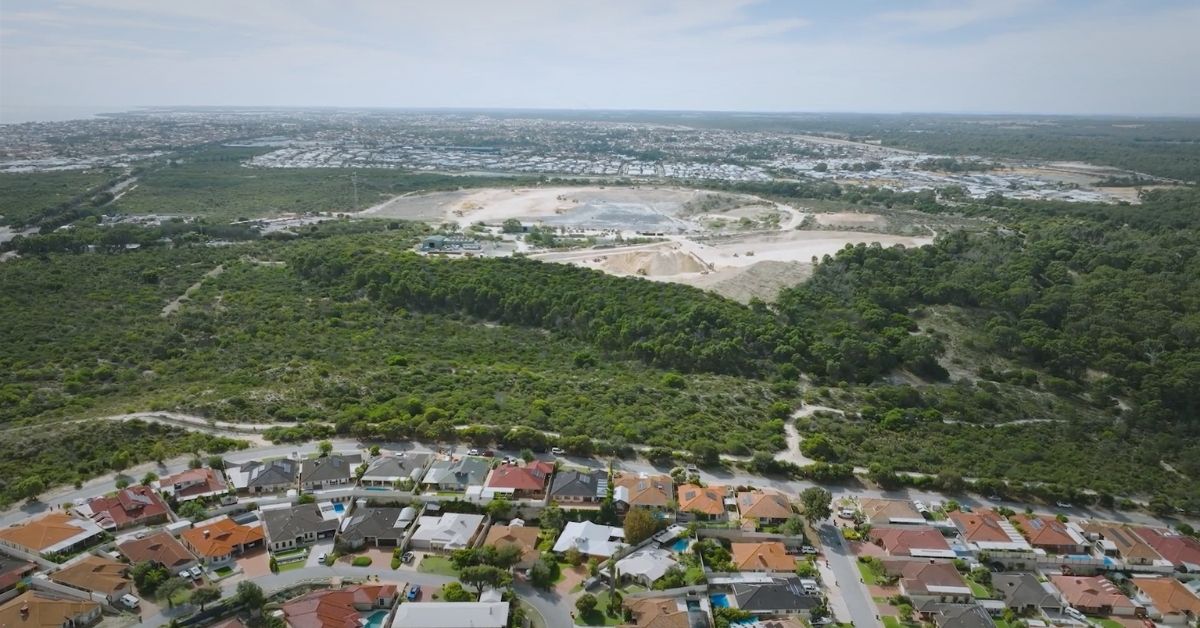 |
| MRC's Tamala Park site manages the household waste of more than a third of the Perth metropolitan population - nearly 850,000 people across seven local government areas. |
MRC is quickly approaching a milestone moment: the completion and closure of its landfill at Tamala Park, which has accepted almost 10 million cubic metres of red bin waste over the past 35 years.
Getting to this stage has taken careful planning and strict adherence to environmental standards and industry best practice. It is our aim to complete the job to the same standards, with a predicted closure date in 2028/2029.
To do this, MRC needs two things: to install a ‘piggyback liner’; and to build a ‘leachate management area’.
Let’s consider the piggyback liner (PBL).
In essence, the PBL is a barrier which protects the underlying environment from the household waste filling the final part of the existing landfill design. Without the PBL, MRC cannot complete the landfill profile in accordance with environmental standards and rehabilitate the site appropriately for future generations. The best independent engineering and environmental advice informs us that installing the PBL is the best practice approach.
“Importantly, and contrary to what has been claimed, the piggyback liner would not extend the life of the landfill, nor extend its current footprint. It is merely the next step in the 35-year plan which is more than 90 per cent complete.
The leachate management area (LMA) tackles a different problem.
As landfills grow, they produce liquid waste known as leachate. Over time, this leachate works its way down through the waste before being contained by the ‘basal liner’, which sits underneath the waste. Unless it is managed effectively, leachate will continue to build up, putting excessive pressure on the basal liner and putting the surrounding environment at risk.
The LMA would allow MRC to manage leachate effectively both before and after closure, reducing the volume of liquid and creating the conditions required to close the landfill.
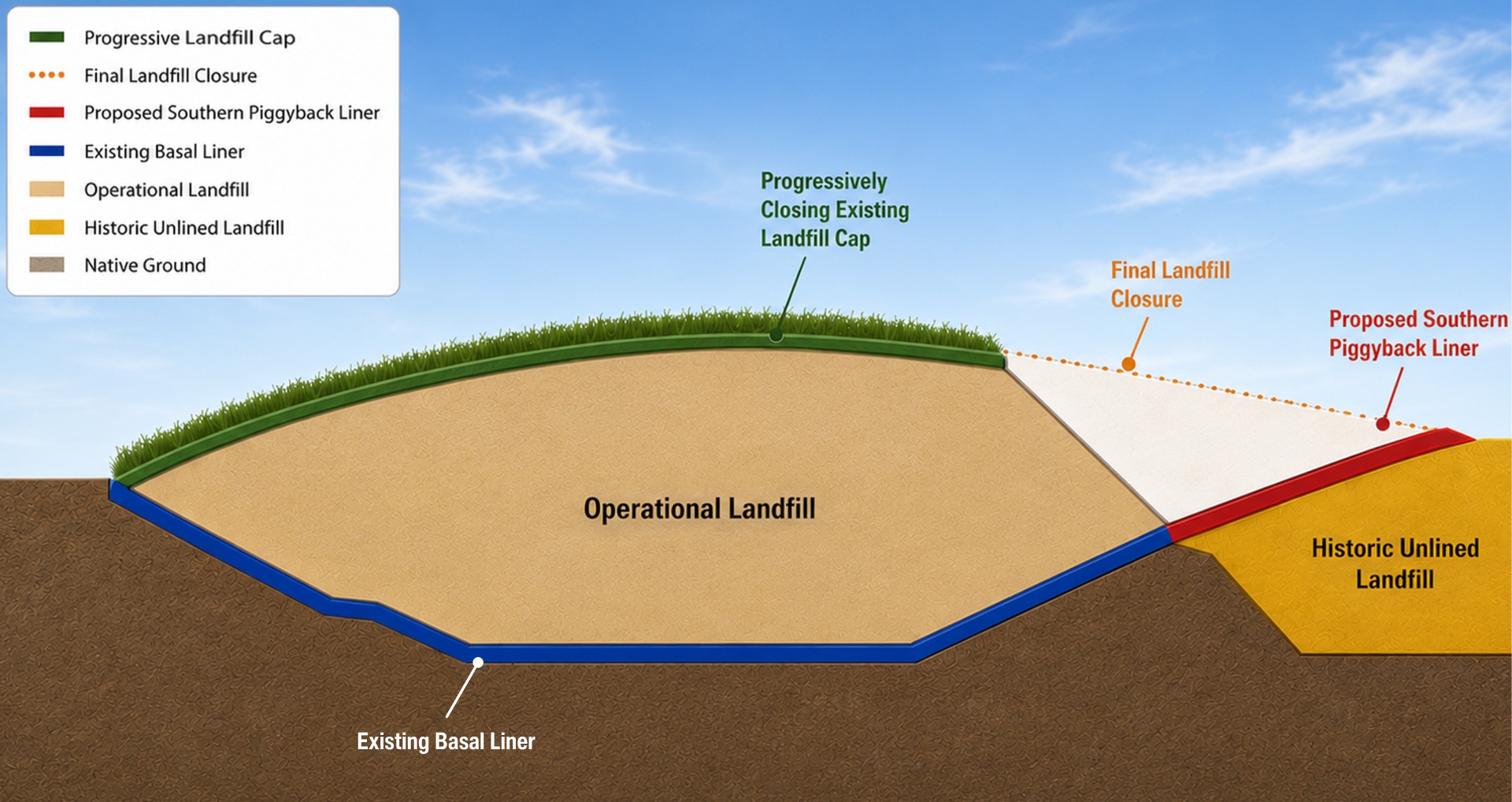 |
| (Click to expand) The proposed 'Southern Piggyback Liner' will allow the landfill at Tamala Park to be completed in accordance with environmental standards. |
MRC is engaging closely with the regulator (DWER) to support the assessment and approval process for these important works. Simultaneously, we are working closely with all seven of our Member Councils to provide the best available waste management services.
For more than five years, MRC has been working towards locating a site where household waste can be accepted when the landfill at Tamala Park is no longer able to receive it: namely, a ‘waste-to-energy’ facility south of Perth.
In June 2026, the Cities of Joondalup and Wanneroo announced that they were no longer willing to back the waste-to-energy plan. This was incredibly disappointing, not only because waste-to-energy provided a long-term solution, met State Government targets and provided the best available value for ratepayers, but also due to the protracted time, effort and financial investment made by all parties through a highly complex process.
Nonetheless, MRC continues to work to provide other options.
One such plan is for Food Organics and Garden Organics (FOGO) processing facility at our existing Neerabup site. Provided the project proceeds, it would be the largest facility of its kind in Western Australia, capable of accepting organics from across the metropolitan area. This could begin as early December 2026.
Contrary to the City of Wanneroo’s assertions that no facility would be available to accept their FOGO in the future, MRC has awarded a tender for future FOGO processing and contract negotiations are well underway. This contract has the capacity to cater for FOGO waste from all Member Councils and their residents.
MRC Council has no plans to close our recycling, reuse and bulk-waste disposal services. MRC is committed to keeping pace with evolving waste disposal behaviours, growing and adapting its existing services to focus on increasing demand (for example, electronic waste / e-waste disposal).
MRC continues to explore opportunities to introduce new resource recovery and waste management initiatives taking advantage of the collaborative regional model to deliver the best possible outcomes for the almost 850,000 residents who rely on MRC’s services.
ENDS
About MRC: Mindarie Regional Council (MRC) is one of Western Australia’s biggest waste management authorities, providing a comprehensive waste disposal service to local government authorities and residents in the Perth Metro Area.
For more information, visit mrc.wa.gov.au
Information for media: For enquiries relating to this release or any other questions from journalists regarding MRC, please contact communications@mrc.wa.gov.au or call 0417 252 227.
Back to All News